Here is your update on the TACA (TALK ABOUT CURING AUTISM) Group for June 2006 - #2. As always, email your thoughts and/or questions. I want to make this e-newsletter informative for you. Let me know your thoughts on how I can improve it.
If this email is NEW to you and you don't recognize the name... WELCOME! These emails happen two to four times a month for the Southern California autism support group called TACA. As always, email your thoughts and/or questions. I want to make this e-newsletter informative for you. Let me know your thoughts on how I can improve it.
Talk About Curing Autism (TACA) provides general information of interest to the autism community. The information comes from a variety of sources and TACA does not independently verify any of it. The views expressed herein are not necessarily TACA’s. We focus on parent information and support, parent mentoring, dietary intervention, the latest in medical research, special education law, reviews of the latest treatments, and many other topics relating to Autism. Our main goal is to build our community so we can connect, share and support each other.
In This Month's Edition of TACA e-news:
| 1 |
Upcoming TACA Costa Mesa Meeting Schedule: |
| |
|
| July 8, 2006: |
Autism One Conference Review |
| |
Time: 1pm - 4pm
Location: Vineyard Newport Church
Costs: FREE
RSVP Required: NO – just come on down! |
| July 17, 2006: |
Special Evening Event - Author Stephen Shore: |
| |
Life on and Slightly to the Right of the Autism Spectrum:
Looking at Promoting Success
Join Stephen Shore in his journey from the nonverbal days and recommendations for institutionalization to the finishing stages of his doctoral dissertation on comparative approaches for helping children with autism lead fulfilling and productive lives. Explanations and practical solutions for addressing sensory issues, meaningful education, as well as challenges faced by adults such as self-advocacy and disclosure, employment, interdependent living and relationships shall be explored. Participants will gain insights on how to promote success for people with autism by using their strengths -- just like everyone else. The presentation ends with an interactive experience giving a sense of some of the struggles people with autism face.
Speaker Biography: Diagnosed with "Atypical Development with strong autistic tendencies," Stephen Shore was viewed as "too sick" to be treated on an outpatient basis and recommended for institutionalization. Nonverbal until four, and with much help from his parents, teachers, and others, Stephen Shore is now completing his doctoral degree in special education at Boston University with a focus on helping people on the autism spectrum develop their capacities to the fullest extent possible.
In addition to working with children and talking about life on the autism spectrum, Stephen presents and consults internationally on adult issues pertinent to education, relationships, employment, advocacy, and disclosure as discussed in his books Beyond the Wall: Personal Experiences with Autism and Asperger Syndrome, Ask and Tell: Self-advocacy and Disclosure for People on the Autism Spectrum, and the forthcoming Understanding Autism for Dummies.
A board member of the Autism Society of America and President Emeritus of the Asperger’s Association of New England, Stephen serves on the Board of Directors for Unlocking Autism, the Autism Services Association of Massachusetts, MAAP, and the College Internship Program.
Time: 7 pm – 9 pm
Location: Vineyard Newport Church
Costs: FREE
RSVP Required: NO – just come on down! |
| August 12, 2006: |
Speaker being confirmed |
|
|
(Please do not contact the church for meeting details. They have graciously offered use of their facility, but are not affiliated with TACA.) And remember, we are still a non-faith based group!
Directions:
405 FWY South, Exit Bristol
Right on Bristol
Left on Baker
Go under FREEWAY.
The Vineyard Church is on the corner just after the freeway - turn left onto the freeway access road,
make FIRST right into the Vineyard's parking lot.
|
|
| |
| |
TACA Has 7 California Meeting Locations: |
| |
|
| Costa Mesa: |
|
|
| West Hills: |
|
- Meets: 1st Sunday of each month
- Time: 7:00pm-9:00pm
- Location: Jumping Genius – 22750 Roscoe Blvd West Hills, CA
(the corner of Roscoe Blvd & Fallbrook Ave)
- Info: Moira Giamatteo
|
| San Diego: |
|
- Meets: 4th Tuesday evening
- Time: 6:30- 8:00 p.m.
- Info: Becky Estepp
- Location: NEW LOCATION AS OF April 2005:
Rancho Bernardo Community Presbyterian Church
17010 Pomerado Road, San Diego, CA 92128 - Rooms 22 A&B
- June 27--Jaime Pineda, Ph.D. - "New Data On Neurofeedback And Autism"
- July 25--Laura Sylvester "Managing Your ASD Child's Records" and “The Autism One Conference--an update from TACA members who attended"
- Aug--No meeting
- September 26 --Dr. Kurt Woeller "Supplements--What are they? What they do and how they can help your ASD child---A DAN! doctor's perspective”
- October 24, 2006 Starting the biomedical journey Presented by: Lisa Ackerman
Biomedical treatments for autism spectrum disorders can be a confusing addition to traditional therapies. This seminar will cover:
- Why you should consider biomedical treatments
- How to start
- What to look for
- What is available as an option
- How are these treatments paid for
This seminar will be presented by a parent – not a doctor – in hopes of providing some suggestions and insight for other parents with children on the spectrum.
|
| Corona: |
|
| |
| Torrance: |
|
- Meets: 3rd Monday of each month
- Location:
Whole Foods Market - 2655 Pacific Coast Hiway - Torrance (@ the Rolling Hills Shopping Center)
- Time: 6:30 - 9:00 p.m.
- Information:
Please contact Beth Mulholland
- Childcare:
This is not offered at this time, sorry.
- Monday, June 19, 2006 @ 6:30 pm
Faith Mitchell MA, MFT and Dr. Larry Shaw www.drlarryshaw.com. will present-
TECHNIQUES TO HELP SOOTHE YOUR CHILD
You will learn: Cutting edge discoveries on mirror neurons. Why it matters in relation to your child in everyday life. How our brains and nervous systems interact between caregiver, (parents & therapists), and your child. Why this matters! How Compassion fatigue can affect your child’s therapist and therefore your child. How to recognize this. Techniques that will help your child self-soothe during stressful times. Live Demonstrations: settling and calming a child before the tantrum begins (reading the cues).
- July 17, 2006 – Speaker to be announced
|
| Visalia: |
|
- Meets: 3rd Wednesday of month
- Time: 6 p.m. "Happy Hour" with GFCF snacks and coffee 6:30-8:30 p.m. Speaker
- Location: (Tulare County) Kaweah Delta Multi-Service Center Auditorium,
402 W. Acequia, Visalia
- Information: Please contact Lynne Arnold
- Childcare: This is not offered at this time, sorry.
- June 21 - Carline Banks, Low-Oxalate Diet
- July 19 - Tim Adams, Esq., of Roberts & Adams, Special Education Attorney
|
| Santa Rosa: |
|
- Meets: 2nd Tuesday of each month
- Location: Swain Center - 795 Farmers Lane, Suite 27
Santa Rosa, CA
- Time: 7:00 - 8:30 p.m.
- For more info: Cathy Ference
- Childcare: This is not offered at this time, sorry.
|
|
| |
| 2. Article A: |
Autism battled in different ways - Grafton family’s autistic son recovers |
Alternative therapy seen as cure
Sunday, June 18, 2006
By Jay Whearley TELEGRAM & GAZETTE STAFF
jwhearley@telegram.com
http://www.telegram.com/apps/pbcs.dll/article?AID=/20060618/NEWS/606180525/1116
GRAFTON— The coast-to-coast, nearly 3,000-mile move the Romaniecs made from Orange County, Calif., to this quiet Central Massachusetts community three years ago was a long, hard trip for a family with two elementary school-age children. It was nothing compared with the journey made by their son Daniel.
Most medical experts maintain that an autistic child writhing on the floor and banging his or her head against a wall will never make the journey to full recovery; that the child never will be healthy, attentive and energetic. The American Autism Society, for instance, offers parents hope by stressing various treatments and educational approaches that lessen the severity of autism, but makes it quite clear in its preamble that there is no cure.
Daniel’s mother, Mary Romaniec, begs to differ.
The boy, now 8, attends public school, communicates well, laughs, plays, studies, teases his mother and older sister, and isn’t at all shy about hamming it up for a photographer. He undergoes some speech therapy to help his articulation and adheres to a strict diet that his mother enforces more stringently than a radar cop enforces the speed limit in a cash-strapped backwater town.
“He has recovered from autism,” Mrs. Romaniec told an interviewer in the kitchen of her Grafton home. “I had refused to say that for a long time … always afraid that something would go wrong. But now I know that it’s true.”
While the best of the best-case scenarios has occurred for Daniel, his mother is convinced that it will continue only as long as he adheres to the lessons they have learned along the way to his recovery. Those lessons came through countless tears and hours on the Internet, on the telephone and meeting with anyone who would talk to her about autism.
That journey taught Mrs. Romaniec volumes about the subject, information that she now is glad to share with any parent of an autistic child or anyone else who may be able to help. Her lessons frequently fly in the face of the conventional wisdom expressed by the federal Centers for Disease Control and Prevention and the U.S. Food and Drug Administration, as well as professional medical organizations such as the American Medical Association and the American Academy of Pediatrics, and major pharmaceutical manufacturers.
Included in that conventional wisdom is the insistence that the mercury used in childhood vaccines is safe. Pushed by parents of children with autism, a bill is before the state Legislature to ban the use of thimerosal, a preservative that contains ethylmercury, in vaccines given to children younger than 3 in Massachusetts.
Statements issued by the CDC and the American Academy of Pediatrics, Mrs. Romaniec notes, suggest that thimerasol no longer is used in childhood vaccines. As the authors of the bill in the Legislature point out, it still is used in flu vaccines and other shots routinely given to children in the state.
Mrs. Romaniec firmly believes that the mercury in the thimerosal contained in those vaccines was a factor in Daniel’s autism.
She remembers being given the measles, mumps and rubella vaccine not long after her daughter, Theresa, was born and at about the time Daniel was conceived, then taking a flu vaccine in the second trimester of her pregnancy with Daniel. The two children are 14 months apart in age.
The mother is adamant that at no point prior, during or after those vaccinations was she told of possible complications. Withheld from her, she said, were warnings about possible neurological damage if a child is conceived shortly after receiving the MMR vaccine, and that the mercury in the flu vaccine could cross the placenta.
“I was told the shots would protect my son, and I didn’t have any reason then to doubt that. These were my doctors. I trusted them.” Now, she points out, even doctors who advocate the vaccinations say they are shocked that she wasn’t told of possible side effects.
Therein, Mrs. Romaniec believes, is the crux of the problem. Parents often accept unconditionally what doctors and the medical community have to say, even when there’s other evidence suggesting that accepted thinking and treatments simply won’t work for many autistic children.
“You’ve done everything you were told to do to protect and care for your child,” she said. “Then that child is diagnosed and you immediately question yourself: ‘What did I do wrong? Is this my fault?’ ”
Beyond passing the proposed ban on thimerosal, Mrs. Romaniec and several other parents interviewed want a full, independent investigation into the effects of vaccines given to children, particularly the MMR shot routinely given to children. She cites research and several studies conducted by those who support her views, but she acknowledges that those who oppose those views cite other studies and research.
The MMR vaccine, she noted, does not contain thimerosal, but it is considered by many parents and some researchers to be a “trigger,” a catalyst that launches the downward spiral of once healthy children. The live MMR vaccine, in combination with the childhood vaccines that contain mercury, create a toxic overload in a genetically predisposed child’s immune system that can lead to autism or autism-related disorders.
“Please, I’m not anti-drug or anti-FDA or anti-CDC. But we’re experiencing an epidemic of autism and related problems in this country that keeps getting worse,” she argues. “It’s time to find out, independently and conclusively, why.”
Mercury, in particular, is labeled a severe health risk in practically everything but the vaccines, Mrs. Romaniec points out. “Is it any wonder why so many people are questioning its use here?” she said.
Asked why mercury would continue to be used in the vaccines if there were any hint of risk, she suggested that any such admission could lead to incalculable financial liability.
Mrs. Romaniec has started a local support group, Helping Our Children Achieve, for families of special needs children. HOCA meets monthly with a goal to provide families with a full list of therapy options, counseling, education concerns, and dietary and biomedical approaches.
Frequently discussed are her own experiences with Daniel. In his case, the mother maintains, recovery occurred because of special diets and intravenous immunoglobin therapy, which repaired Daniel’s immune system. The diets, often arrived at by trial and error, totally eliminated glutens, caseins and various metals from her son’s intake.
“Mary is more than mentor,” says a Blackstone Valley mother of twins who were diagnosed with autism a year ago. “She gives us more than hope; she provides knowledge.”
Is that knowledge working?
“The best way I can describe it,” the mother responded, “is something my father said to me a few days ago. I know my boys have made progress but I was feeling down, wondering if it was enough.”
“You know,” she said her father told her, “it wasn’t that long ago that I couldn’t go out for a walk with one of my grandsons in my arms. Now I’m out walking with both of them on their feet holding my hands.
“Yes, it is getting better.”
Contact Jay Whearley by e-mail at jwhearley@telegram.com.
Special hugs and thanks to the Romaniec family for continuing to share the message to help other families in need! Recovery for children who are sick and diagnosed with autism is possible. And GOOOO DANIEL!
|
|
| |
| 2. Article B: |
Guest Blog: 'I Am an Autism Mom' |
www.washingtonpost.com/onbalance
Posted at 07:00 AM ET, 06/13/2006
Welcome to the Tuesday guest blog. Every Tuesday, "On Balance" features the views of a guest writer. It could be your neighbor, your boss, your most loved or hated poster from the blog, or you! Send me your entry (300 words or fewer) for consideration. Obviously, the topic should be something related to balancing your life.
Everything Else Vanishes
By Christina Adams
Christina Adams is the author of A Real Boy: A True Story of Autism, Early Intervention and Recovery. Her work has appeared on NPR and in The Los Angeles Times Magazine and Brain, Child Magazine.
Life was normal for my son for a time, and then it wasn't. The bright, social 15-month-old who charmed his pediatrician with his curiosity and skills turned somber, spent his time alone and became obsessed with water and vacuum cleaners. I didn't know why, didn't know that at nearly three years old he'd be pronounced autistic. He wasn't one of those kids, the ones who eat only french fries and milk, won't sleep, scream when their shirt tag grazes the back of their neck. He was just a bright child who was a little "different," and then suddenly, he was hand-flapping and walking in circles. While I was still dreaming of his future, my lovely, talkative baby slipped away.
Then I found out why--and like every other parent, I was terribly afraid. I was swamped with medical terms and dismissive doctors. Other parents offered me the salvation of information, but then I faced a giant spinning Lazy Susan of diets, medications, supplements, and expensive therapies. Plus, most day-care providers kick out kids on the spectrum--mine got kicked out of two schools in two months---so I'd pretty much hit rock-bottom. I dropped the novel I'd just written, stopped my other work, and began the full-time job of rescuing my son.
Naturally, these circumstances make it hard for "autism moms" to work. " 'Parent of kid with autism' is their primary--and unpaid--job," says Peter Gerhardt, president of the Organization for Autism Research. "Nearly 60 percent of moms of kids with disabilities are unemployed; between 10-20 percent of fathers, too." When a mother becomes Autism Super Mommy to rehabilitate the child, she faces criticism from all sides. "The office says they understand, but they want you to work, while the therapists recommend that you quit," says L., a married senior executive who relies on caffeine, a cell phone and a nanny to run her life -- and who cannot quit because she makes the bigger salary.
You do what you can. Many moms, like I once did, even run 40-hour-per-week in-home therapy programs, cook food without dairy or wheat and see multiple doctors and clinics. Before the week even started, my assignments were overwhelming. Once I got so stressed from the paperwork and unrelenting schedule that I couldn't breathe and had to see a cardiologist for chest pain. Still, I was lucky my child got treated while I was married and could stay home---although I'm now single. Autism can tax your marriage, too.
Treating autism is about money and time--lots of it. Even if someone takes your child to therapy--after you find and schedule the therapies---he needs full-time help with speech and social skills. My son and I built his language word by word, from breakfast table to bedtime story, which helped him become the gifted conversationalist he is today. Truth is, if not for autism, I'd probably have two published novels and be a college professor, and I try not to think about my income and Social Security earnings. But any autism parent would shove their career away with both hands for the chance to talk with their child.
Still, autism - like motherhood -- can give you magic powers. I learned science, law, therapy and advocacy; I became fierce in the pursuit of justice. Last year, when my knees nearly buckled in the sedate hallway leading to my first divorce lawyer appointment, I whispered to myself, I can do this: I am an autism mom.
I have friends who handle full-time careers well; others have gone part-time, while some will never return to work. Most moms, after their children recover, hit a middle ground, or stay very disabled, eventually reclaim parts of their previous lives--and this can include work.
Still, for autism moms, our child is our life now. We watch the beautiful face that often hides a brilliant mind, the face of the boy or girl who loves us more than anyone, who gives us more pride and struggle and agony and reward than a paid job ever could. This is our work. Everything else vanishes. |
|
| |
| 2. Article C: |
Newport-Mesa school district addresses its need to help children with disabilities. |
| Educational victories
By Michael Miller, Daily Pilot
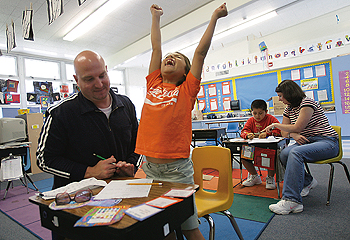
KENT TREPTOW
Natalie Gregnano, 6, celebrates after being told by instructional aide Mike Juric that she has successfully completed an assignment at Harbor View Elementary School on Thursday. Natalie, along with fellow student Antonio Silva, 6, and aide Elizabeth Gannon, in background, are participating in a Primary Pride class, which teaches students who have had difficulties in other classes due to behavioral challenges.
His parents had noticed the warning signs. The boy had trouble balancing and reading basic words. He often paced back and forth. He could recite facts about animals and sea creatures, but only at his own prompting. When asked questions, he could rarely articulate an answer.
This year, James and Lisa Eddy discovered the truth: Their son Lex, a third-grader at Paularino Elementary School, was diagnosed as autistic. As a result, he would need to be in a classroom better suited to his needs. In the past, the family had paid a speech therapist to work with Lex. Now, they were prepared to look into private schools.
"I would have been desperate enough to pay anything to find a school," Lisa Eddy said. "I wouldn't have sued the district. I just would have done without."
Then, two things happened. At the start of the school year, the Newport-Mesa Unified School District hired a batch of new therapists to work with special-education students -- and, in doing so, provided Lex with a speech therapist at no extra cost. Meanwhile, the district implemented a new autism program at Killybrooke Elementary, where Lex plans to go after leaving Paularino.
With services now available in-house, the Eddys can give their checkbook a bit of a rest. Their story is not unusual here. A year after the district was hit with 73 legal cases regarding its special-education services -- the third-highest of any district in the state -- Newport-Mesa has set out to bolster its programs for special-needs children, hiring new faculty, installing classes and offering more training for teachers.
Whether its special-education programs are better than a year ago, Newport-Mesa is prospering on the numbers page. This year, the district has:
* Budgeted a record $38 million for special education and stayed on budget -- compared with 2004-05, when it exceeded its original plan by nearly $3 million.
* Reduced by half the amount of money spent to send children to nonpublic schools and outside agencies.
* Decreased the amount paid to parents through reimbursements and settlement agreements, both major money-losers a year ago.
"We're in the process," said school board member Dana Black, who works closely with Newport-Mesa's special-education department. "We haven't arrived yet, but we're in the process of hiring those people. It's not that we've taken it more seriously. We've just been able to get our arms around it ourselves."
DOING ITS OWN WORK
Self-sufficiency, or lack thereof, was a major issue for Newport-Mesa last year. During 2004-05, the district enlisted more than 50 outside agencies to provide therapy or assistance to students, with some groups -- including Speech Pathology Associates and Cornerstone Therapies -- receiving dozens of contracts.
Those outside hirings ran Newport-Mesa's bills up by more than $5.6 million. Starting this year, the district went on a push to offer more services itself.
Killybrooke and Harper Preschool both added autism classes last fall, just as the district began a three-year contract with Autism Partnership to train classroom aides. Costa Mesa High and Harbor View Elementary have started classes for students with emotional problems. The district, which had a shortage of specialists last year, has hired five speech therapists and two occupational therapists -- and opened clinics to go with them.
"These kids are coming back in and getting their services internally," said Denise Knutsen, Newport-Mesa's operations director for special education. "It allows us to monitor their progress more closely."
Newport-Mesa still has plenty of students getting services elsewhere this year, but the number is dropping. According to Laura Rydell, the district's nonpublic schools coordinator, 16 fewer students are in outside schools now than a year ago, and six more are in the process of returning to district schools.
In addition to bringing students back into the district, Newport-Mesa is pushing to get them back in classrooms where special-needs students can work alongside their peers who don't have disabilities.
NO SIMPLE SOLUTION
The question remains whether Newport-Mesa's legal woes have abated this year. The state Office of Administrative Hearings, which took over litigation from the Special Education Hearing Office in July, does not keep records of the number of cases per district. Newport-Mesa could not provide a list of its own, although Diana Hernandez, the district's special-education director, estimated that there were around 55 cases by May -- slightly behind last year's pace.
Financially, the district's numbers are solid on the whole, but every special-education case is different -- and there may never be a blanket solution. Lisa Ackerman, who heads the nonprofit group Talk About Curing Autism, said she still hears complaints from the 90 or so Newport-Mesa families that she supports.
"It's great that they're hiring more speech therapists, more occupational therapists, taking more initiative behind an epidemic, but we won't know their report card until these kids are 18," she said. "Did they graduate from high school? Are they going to be taxpayers? It's all subjective right now."
Even with Newport-Mesa's special-education expenses going down, the district hasn't stopped expanding. Next year, Knutsen said, another six therapists will join the staff, and new medical equipment for special-needs students may follow. Killybrooke, which launched a class this year for autistic children, plans to add a second in the fall, with Paularino looking to add one as well.
For the moment, the district's expanded programs have lessened some of the burden from a year ago. Sandi Ames, chairwoman of Newport-Mesa's support group for parents of special-education students, said having services in-house makes communication easier.
"You have intimate knowledge of each other," she said. |
|
| |
| 3. Article A: |
Ministers agree to MMR autism inquiry |
By Beezy Marsh, Health Correspondent
(Filed: 18/06/2006)
An inquiry into whether the MMR jab has caused autism and bowel disorders in children is to be launched by the Department of Health.
As the number of measles cases reaches a 20-year high because of loss of confidence in MMR, ministers have agreed that tests should be carried out on children whose families claim they were damaged by the vaccine.
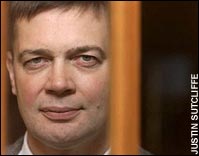 |
| Andrew Wakefield faces an investigation into claims of professional misconduct |
Fears of a link between MMR, regressive autism and a rare bowel disorder have fuelled concern over the triple jab - for measles, mumps and rubella - despite the insistence of government experts and all the Royal Colleges that it is safe.
For almost a decade, parents have campaigned for the National Health Service and the Department of Health to investigate what happened to their children.
More than 2,000 families say that their youngsters suffered a regressive form of autism - and, in some cases, severe bowel problems - after having the jab.
Tests on half a dozen British children with severe bowel disorders, autism and, in one case, severe epilepsy - carried out in preparation for potential legal action against jab manufacturers - found traces of the MMR strain of measles in their guts, spinal fluid and in one child's brain.
Most of the cases have been dropped after the withdrawal of legal aid, but the findings have continued to cause concern among parents.
It is hoped that the inquiry will allow government scientists to explain what the vaccine virus is doing in the children's bodies and whether it may be responsible for their poor health or their autism.
It is understood that David Salisbury, the Head of Immunisation and a passionate defender of MMR, gave the green light to the Department of Health to launch the study.
The Department has not altered its stance that MMR is safe and a better option than single jabs, but it has agreed that the parents' claims will be investigated by leading specialists.
A spokesman said: "The department would be very happy to consider the information from the families, and would welcome appropriate samples being analysed by acknowledged international experts in the field."
She said that families should write to Prof Salisbury to invite the department to examine their child, adding: "We are not aware that these parents have ever made us such an offer before."
However, the parents insist that they have made repeated offers since the late 1990s - including at a meeting with the then health minister, Tessa Jowell, in 1997 - but the Department of Health never took them up.
In 2001, as concerns about the safety of MMR raged, Tony Blair was criticised for refusing to say whether his youngest son, Leo, had received the triple jab. The Prime Minister insisted that he would not discuss the health of his children in public.
The offer comes after a new study that found measles virus in the guts of 85 per cent of children with a regressive form of autism.
Early analysis by researchers at Wake Forest University School of Medicine in North Carolina has found the measles strain is identical to the one used in MMR.
The findings back previous research by the gastroenterologist Andrew Wakefield. He has been branded a "maverick" by the medical community and now faces an investigation by the General Medical Council into claims of professional misconduct.
The Sunday Telegraph has learnt that, in addition to Dr Wakefield, the GMC is also investigating his former colleague, Simon Murch - both used to work at the Royal Free Hospital in north London - now a professor of child health at Warwick University, and Prof John Walker-Smith, the former head of gastroenterology at the Royal Free, who retired in 2000.
Prof Murch could not be contacted last night and Prof Walker-Smith declined to comment on the GMC investigation.
Families who have campaigned for an inquiry yesterday welcomed the announcement.
Wendy Pickering, from Shoreham-by-Sea, West Sussex, whose son Lewis, 17, became epileptic after having the MMR jab as an infant, said: "All I have ever wanted was someone from the NHS or the Government to explain to me what the measles virus from the vaccine is doing in his brain.
"If it does turn out that MMR is behind it, it should not be given to other children.
"Until now, we have been stonewalled by the Government."
Publishers wishing to reproduce photographs on this page should phone 44 (0) 207 538 7505 or e-mail syndication@telegraph.co.uk
Special note to Dr Andrew Wakefield: Thank you for your hard work and personal sacrifices. You are a true hero to hundreds of thousands of families. It is with great sadness to see this attack on science continue. You will prevail because the truth is the truth.
More support for Dr Wakefield:
WAKEFIELD , NEEDLEMAN; PUTTING SOUND SCIENCE ON TRIAL
IS HISTORY REPEATING ITSELF? UNFOUNDED ‘SCIENTIFIC MISCONDUCT’ CHARGES AGAINST WAKEFIELD AREN’T A FIRST FOR COMPROMISED SCIENCE
Nixa , MO – It’s difficult not to notice the similarities between now and 30 years ago. A researcher, vigilant in finding answers, becomes the subject of a big-industry no-no: questioning the safety and efficacy of a popular product.
Back in the 70’s, lead-based gasoline and paint were two of those products. That is until one researcher, Dr. Herbert Needleman, studied the lapse of children’s IQs in direct correlation with lead exposure. In response, the lead industry hired “neutral” scientists to bring Needleman up on charges of ‘scientific misconduct.’ One of these researchers later confessed to being paid by the lead industry. Needleman’s sound research is why we no longer have lead in gasoline and paint.
Is Dr. Andrew Wakefield the subject of a similar witch-hunt three decades later? Wakefield is being investigated by the General Medical Council for scientific misconduct, specifically, carrying out ‘inadequately founded’ research when his findings concluded that vaccine-strain measles were present in children with autism as the result of the MMR vaccine. Wakefield encouraged the use of single-dose vaccines as an alternative to help alleviate this problem. Just last week, preliminary study results were released that replicates Wakefield’s research.
Dr. Stephen Walker, of the Wake Forest University School of Medicine, studied children with regressive autism and bowel disease. "Of the handful of results we have in so far, all are vaccine strain," he said of the type of measles present in the intestines of 87% of the autistic children studied.
As it stands:
- The General Medical Council has not thoroughly reviewed the Wake Forest research.
- The General Medical Council has not made any formal allegations against Wakefield, despite a two-and-a-half-year investigation.
- All allegations have been made by a journalist. None have been filed by a patient or parent.
The National Autism Association (NAA) fully supports Dr. Andrew Wakefield’s research. Wendy Fournier, parent and president of NAA, feels proper review of all the findings related to MMR should be the priority of the General Medical Council.
“In understanding that the court of public opinion sits in the driver’s seat, entities such as the General Medical Council discredit sound research in the name of a supposedly well-perceived vaccination program. Yet, this is a compromise. Compromise has no place in science, even science surrounding vaccinations. Dr. Wakefield is one of the few that conducted research in truth, and yet the leaders in medical authority continue to compromise the health of subsets of the population that have negative reactions to shots like the MMR. Are we supposed to view these children as acceptable losses?” asks Fournier. “Dr. Wakefield’s willingness to find answers for these subsets is a testament to his scientific integrity.”
Vaccinations have been the center of highly emotional debate. Unlike gasoline and paint, the majority of scientists are less likely to speak out against the health risks of vaccines in certain children. “We are for safe vaccinations, as is Dr. Wakefield,” says Rita Shreffler of NAA. “Never before have we seen the amount of compromised science than with vaccinations. Instead of embracing the problem and finding a solution, medical authority has regrettably turned a blind eye to its most basic tenet, ‘first, do no harm.’”
For more information about autism, visit www.nationalautism.org.
|
|
| |
| 3. Article B: |
Forum focuses on links between vaccine, autism |
By Mary Jane Hanron/ Correspondent
Friday, June 16, 2006
Devastation, determination, bewilderment and faith were evident on the faces of attendees at a seminar held recently at St. Anthony's Parish Hall. The event's purpose of spreading awareness about a possible link between childhood illnesses and vaccines was bringing a community together in a common cause.
Approximately 200 concerned citizens were present at the forum Sponsored by the Parent Advisory Council Network,(PAC) to learn about the importance of safe vaccines for children. The seminar addressed the possible relationship between the mercury-based preservative "thimerosal" contained in some children's vaccines and the escalation of autism and other neurological disorders.
A panel of experts spoke to the audience about the many aspects of the problem, its ramifications and possible steps toward solutions.
Trish Seksay, event organizer whose nephew, Cameron soon will turn three was diagnosed recently with autism following a vaccine. The family knew immediately there had been a change in his behavior. Devastated by this news, Seksay and her father, Dr. Robert V. Dandrow, retired chief of obstetrics and gynecology at Milton Hospital, Founding Fellow of the American College of Ob/ Gyn and Associate Professor at Tufts Medical School, devoted their waking hours to finding help for Cameron. Cameron's parents, Trish's brother Phil and sister-in-law Tricia cared for the child's immediate needs around the clock..
"It really is a family effort," said Seksay. "We are fortunate to have my father who is from a medical background and can meet with people in the system. We have been researching this and the information is endless. When we realized how widespread it was, we knew we had to get information to more people."
In her research, Seksay discovered that Dan Burton, U.S. Congressman from Indiana, is the grandfather of two children with autism and involved with legislation and actions that will improve the situation. His office recommended that to communicate with larger groups about these topics, Seksay work through "systems," thus the PAC agreed to sponsor the program with the approval of Denise Walsh, superintendent of Cohasset schools.
The panel assembled provided a wealth of information. Mark Blaxill, vice president of SafeMinds, gave a presentation based on numerous studies and research that indicated a correlation between the increases in neurological disorders and vaccines given to children. Among the facts considered were the content of the vaccines and the number of vaccines given during particular time periods.
SafeMinds is an organization whose mission is "to serve proactively in science, legal and public awareness arenas and in an educational capacity to regulatory and legislative bodies." Blaxill indicated that though this "hypothesis is denied in print... the explosion rates are recently discovered." As parents and medical professionals he said people should ask the right questions. "We should ask, 'why are so many children sick?'" he said.
Dr. Richard Deth, a molecular neuropharmacologist and professor at Northeastern University, explained the science and chemistry of vaccines and how thimerosal travels through the body. His comments indicated in a great number of cases where neurological disorders develop there is also a lower level of "glutathione," which carries the metallic substances through the body to be eliminated. The combination of a low level of this natural genetic agent and the thimerosal are present when these disorders appear.
Also attending the forum was state Rep. Garrett Bradley, D-Hingham, sponsor of House Bill (H4703) . "Like so many people," Bradley said, "my interest grew when someone close to my family was diagnosed with autism. At the same time, I was hearing from other parents and from teachers that there were more and more kids that were sick..
" In 1999 the FDA and the CDC suggested that thimerosal be removed from all vaccines. Seven years later, they haven't done it."
Bradley is joined by representatives Barbara L'Italien-R and Bradford Hill-D as bipartisan sponsors to make Massachusetts one of 32 states attempting to pass legislation(H4703) banning mercury preservatives in children's vaccines.
"We need constituents to call and support this bill and ask that it be brought to the floor of the House," Bradley said. " California and New York have passed similar legislation. As California and New York go, so go the business markets for the rest of the country. We are not against vaccines. We simply want the assurance of safe ones."
Bradley explained safeguards have been added to the language of the bill to assist the medical community in the event of a catastrophic illness, natural disaster or pandemic. The law would be scheduled to go into effect in 2007, but has ways to be extended to 2010 if necessary. "We can work with the medical community in the event of an epidemic or unexpected public health emergency," he clarified.
Closing the evening's program was Mary Romaniec, a counselor and mother of a son who recovered from autism. She spoke of her struggle and perseverance as she sought answers for her child. "The answers were not in my physician's hands," she said. "I thought, 'Parents are desperate.' We want information. When we don't know what to do, that's when parents lose hope."
"I didn't stop," she continued." I found a diet that helped him. It may not have helped him....It may have been something else. I may never know. I kept looking. He lost his diagnosis at age four."
Her final words of advice: for those just beginning the battle were, "Immerse yourself in information. Ask questions. If someone tells you there is no such thing as a recovered kid, they are wrong."
Suzanne Messina, founder of REACH (Research, Education, and Action for Autism Spectrum Children) and mother of three children on the autism spectrum, ended the forum with words of inspiration. She outlined the story of her children and the frightening moments of the unknown she had experienced. In a voice strong with purpose she said, "We have the power to fix it."
"This is what we can do: We can follow Representative Bradley's leadership, join organizations like SafeMinds, REACH and National Autism. Know that there are variations from textbook disorders. Trust your gut instinct. Recover your child."
http://www2.townonline.com/cohasset/localRegional/view.bg?articleid=518916&format=text |
|
| |
| 3. Article C: |
Dan Olmsted – New Entries |
|
| |
| 3. Article D: |
Anti-Mercury AD by Autism Parents in Monday's
Atlanta Journal Constitution
|
This Anti-Mercury AD by Autism Parents will appear in Monday's Atlanta Journal Constitution on The Weather Map page which is a half page, full color. The rate for such an ad is $4800, prepaid. See note below.
 |
|
| |
| 3. Article E: |
Researcher studies connection between autism, vaccines |
http://www.paramuspost.com/article.php/20060612194829258
By Scott Hilyard Monday, June 12 2006, 07:48 PM

|
CHILDREN AND AUTISM |
Dr. David Ayoub, the self-taught expert on vaccines, mercury and the autism epidemic, stood in the back of the room on the second floor of First United Methodist Church in Normal, Ill., recently on the verge of a lecture.
He faced the backs of his audience. They all faced a portable tripod screen that would soon display a dizzying torrent of Power Point charts, graphs, facts and statistics for the consumption of the standing-room crowd of Illinois State University college students, instructors and people whose connection to the misery, mayhem and melancholy of autism were more personal, confounding and intense.
He began: "You might wonder that a radiologist who doesn't have a child with autism might come across as being a little bit on the fringe (on this topic)," Ayoub said, the light touch of self-deprecation, depending on a person's point of view, either cementing his credibility or undermining it. "I just want to know the truth like I'm sure you just want to know the truth."
Ayoub then tore into his short-form two-hour lecture (he said he has eight hours of material), preaching to the choir, firing up his base, trolling for converts.

|
AUTISM IN A SYRINGE? |
|
"You might as well not take notes," said Ayoub, a Peoria native and high school track superstar, who now lives in Springfield, Ill. "You won't keep up."
ELUSIVE THEORY GAINS MOMENTUM
The absolute truth about autism and mercury is as slippery and hard to grab as a bead of quicksilver on a clean glass surface. It's no longer dismissed as a wild-eyed theory clung to by desperate-for-answers family members of children with autism. The debate over whether mercury-laced vaccines administered to infants and toddlers in increasing amounts in the 1990s sparked an autism epidemic has entered the realm of more mainstream science. And appears not yet ready to fade away.
The lines, however, are still sharply drawn and both sides are dug in deep. Public health agencies, both the American Medical Association and American Pediatric Society, and the makers of the vaccines - powerful and influential institutions all - maintain the unified front that the vaccines and vaccine schedules are now, and have always been, safe.
That there might, might, be a connection between mercury and autism is an idea that has gathered momentum in recent years. More and more medical professionals and researchers, like Ayoub, politicians and the burgeoning population of autism families have been absorbing the voluminous amount of literature and data and coming up believers. A book that laid out the case for the mercury and autism connection, "Evidence of Harm" written by David Kirby, was a New York Times best seller last year and landed the author on "Meet the Press" where he debated the topic with Harvey Feinberg, the director of the Institute of Medicine.
STARTLING NUMBERS
Here's what drives the controversy:
Mercury is among the most toxic agents on earth and is a known neurotoxin. Autism, once thought to be the result of bad parenting, is now designated as a neurological disorder.
Autism was first described in medical literature in 11 case studies written by Dr. Leo Kanner in 1943, 14 years after thimerasol, a mercury-based preservative used to keep vaccines from contamination, was developed by the drug company Eli Lilly. Unheard of before Kanner's case studies, autism remained consistently rare until the 1970s. In the United States the incidence of autism in that period was between 1 and 3 per 10,000 children; it rose to 20 to 40 children per 10,000 births in 1998. Today the rate is one in 166 births.
The startling increases coincide with an increase in the number of vaccinations infants and toddlers receive in the natural course of their pediatric care as new shots were added to the schedule. Even though each shot contained only traces of thimerosal, the cumulative amount raised concerns to some. The Los Angeles Times cited an internal drug company memo from 1991 it had obtained that said that "6-month-old children who received their shots on schedule would get a mercury dose up to 87 times higher than guidelines for the maximum daily consumption of mercury in fish."
Public health officials say there is no evidence of a link between mercury, vaccines and autism. Better diagnostic skills and an expanded definition of what sort of behaviors fit on the autism spectrum explain most of the increase in rates.
Still, in July 1999 the Centers for Disease Control and Prevention recommended that thimerosal be removed from most vaccines as a precaution. Here is its explanation:
"A review conducted by the Food and Drug Administration concluded that the use of thimerosal as a preservative in vaccines might result in the intake of mercury during the first six months of life that exceeds the Environmental Protection Agency, but not the FDA, the Agency for Toxic Substances and Disease Registry or the World Health Organization guidelines for methylmercury intake.
Thimerosal contains ethylmercury. Methylmercury is a related compound and has been more thoroughly researched than ethylmercury. Thus, federal safety standards are based on information we have about methylmercury.
FDA's review found no evidence of harm caused by doses of thimerosal in vaccines, except for minor local reactions."
Ayoub is mistrustful of the CDC's claim.
"It just kind of sounds funny," he said at his Illinois State University lecture. "They're saying (thimerasol) causes no harm, but get it out (of vaccines) as soon as possible."
SEARCHING FOR ANSWERS
Ayoub is well-known in certain circles in Peoria for reasons that have nothing to do with autism. The Peoria High School graduate is in the Peoria Sports Hall of Fame mostly for his state championship race in the half-mile that was the fastest nationally at the time and remains one of the fastest ever and the fastest in Illinois almost 30 years later.
He went on to run track at the University of Illinois. Then he went to medical school. He is a part-time radiologist and works out of Springfield's Memorial Medical Center, an assistant professor at Southern Illinois University School of Medicine and the unpaid medical director of the Prairie Collaborative, an immunization watchdog group.
It might not surprise those who lost track of Ayoub when he left Peoria that he would emerge in the public eye a passionate activist for an underdog of an idea. Though knee surgery ended, for now, his running days, Ayoub maintains his championship runner's doggedness, focus and intensity. Fluent in science-speak, the words burst forth with rapid-fire assuredness that falls on this side of benign zealotry.
Actually it was the knee surgery three years ago that led to his interest in mercury, vaccines and autism, a medical debate far removed from his radiology background. Laid up, Ayoub exercised his mind by poring through medical journals and studies and came by accident upon the autism controversy.
"The more I read, the more I was drawn into the issue," said Ayoub, in a recent interview in his cramped office at Memorial Medical Center in Springfield. "The material is compelling."
FINDING TRUTH IN MEDICAL STUDIES
Since his self-education, Ayoub has traveled the country to Defeat Autism Now!conferences and others and has testified before two state legislatures, Illinois and Massachusetts. The opposite of a paid position, he figures he has spent about $30,000 of his own money. He lectures for free.
His technique is to critically study the available literature, look for conflicts of interest and results that may have been spun.
"You can do so much with studies to make them say anything you want them to," he said. "I try to get behind the numbers and statistics to find what a study is truly saying."
For instance, a study in Denmark is often cited as counter-argument of the autism-mercury link, by showing that reported new cases of autism did not decline after thimerasol was removed from all vaccinations in 1992. Ayoub shows that the authors of the study didn't sample a consistent population of patients, thus the results are skewed. He believes it is proof of nothing.
Ayoub believes there are innumerable paths to the autism spectrum. There are people with autism who had no exposure to thimerasol, and not everybody who received vaccinations with thimerasol has autism. There might be genetic and environmental causes and either one might work in concert with the introduction of even small amounts of mercury into a child's system and create a recipe for autism.
"The point is to keep looking until answers are found," Ayoub said.
SIDEBAR
For many parents of children with autism, theory makes sense
Copley News Service
While scientists, doctors, public health officials and researchers debate whether a link exists between autism and trace amounts of mercury once found in childhood vaccines, there is one place in the United States where the argument was settled long ago:
Inside a lot of homes of families with children with autism.
Prevailing medical opinion be damned, many parents are true believers.
"I completely believe my son's autism came from the end of a vaccination needle," said Paula Sessing of Peoria, Ill., who joined a lawsuit with hundreds of other plaintiffs filed in Texas against the federal government seeking compensation. "He was born typically normal and at the 9-month mark he went in and received several vaccinations in one trip and the bizarre behavior started almost immediately."
That's called "anecdotal" evidence of a link, and in the eyes of medical researchers, one story, no matter how compelling, doesn't prove anything. Sessing moderates an Internet autism group that has more than 3,500 subscribers.
"You'd be amazed at the number of stories just like mine," Sessing said.
Susan Grimm of Groveland, Ill., has two autistic sons and a nephew with Asperger's, a milder form of the disorder often characterized by hyper-intelligence instead of the withdrawn isolation of autism. Her sons were immunized within the timeframe of the autism epidemic, and she was at risk in other ways. She received eight dental amalgam fillings that contain small amounts of mercury and received shots in the military she suspects contained thimerasol.
"I believe there is a genetic predisposition for autism that thimerasol might trigger in some people and not in others," Grimm said. "Just like if you had lung cancer in your family it would be stupid to smoke, if you're genetically susceptible to heavy metals you might want to avoid shots with mercury in them."
Like Sessing's son, Grimm's son was developing at a normal pace when he received a vaccination shot at 18 months.
"He had a local reaction that was bigger than a quarter around the site of the shot, and he came home and just collapsed and slept and slept and slept," she said. "It was very concerning."
Soon thereafter he stopped singing his ABCs. Then he stopped talking. Grimm has had some success with chelation, a treatment program that removes heavy metals from the body. Now both of her sons are fully verbal.
Lauri Hislope of Peoria, the current president of a local autism support group and information clearinghouse, says her son Kyle was "assaulted by vaccine." After developing normally up until 16 months, his turnaround was dramatic and fast. In 2004 at 13, Kyle was too disruptive, violent, unpredictable and such a drain on the family's emotional state that he moved to the residential Hope School in Springfield.
"He's doing much better in that environment," Hislope said. "And we're not giving up, but it has been very, very difficult."
All of the mothers said they support the public health vaccination effort. Studies are clear; when vaccination rates decline, childhood illness increase. Reports of a mumps outbreak in Iowa highlight how necessary and important is continued vigilance against disease.
And though thimerasol has been removed from childhood vaccines, it remains in many flu shots. Children ages 2 to 5 are now recommended recipients of annual flu shots and they are routinely given to pregnant women. Thimerasol-free flu shots should be readily available upon request.
- Scott Hilyard |
|
| |
| 4. |
UPCOMING TACA ACTIVITIES! |
| |
|
| April 1 Kickoff |
TACA’s 2nd Annual Friends and Family Campaign kicks off on April 1 |
| |
 Last year TACA families raised $35,000! TACA has grown to serve over 2,000 families and provides 95% of our services at no cost — Last year TACA families raised $35,000! TACA has grown to serve over 2,000 families and provides 95% of our services at no cost —
WE NEED YOUR HELP!
Fundraising Kicks Off in April
Since TACA was started, dozens of TACA families have asked me “How can I help?” Last year we launched the Friends and Family campaign. We asked you to help by reaching out to your extended community to raise awareness about autism and funds to help TACA continue to fulfill its mission of educating and supporting families and building community. You came when we called and raised an amazing $35,000!!
This year we’re asking you to do it again. And to stretch yourself a little farther outside your comfort zone, into your more extended circle of family and friends. If you do that, together, I know we can raise $50,000 this year!
Request Your Picture of Hope Fundraising Kit
Picture of Hope Fundraising kits include: Complete instructions and suggestions on approaching family, friends, co-workers, neighbors and the company where you work, five magnets, and five sets of TACA brochures and information. You only need to supply the picture of your child!
For more information please contact us to order your kit or pick up your kit at a monthly TACA meeting.
TACA Friends & Family Efforts - SUPER STARS! |
Nigro family |
$ 10,000.00 |
Taylor family |
$ 1,500.00 |
Monahan & Skosh Monahan’s |
$ 1,500.00 |
Busse Family |
$ 1,240.00 |
Yencso family |
$ 1,000.00 |
Chin family |
$ 936.00 |
Brodie family |
$ 540.00 |
Tang Family |
$ 500.00 |
Marroquin Family |
$ 425.00 |
Wu/Chiang Family |
$ 370.00 |
Rose Family |
$ 310.00 |
Yang Family |
$ 300.00 |
Lions Club Costa Mesa |
$ 300.00 |
Ackerman Family |
$ 300.00 |
Estepp Family |
$ 250.00 |
Ancich Family |
$ 200.00 |
Romero family |
$ 175.00 |
Barboza family |
$ 100.00 |
Lowey family |
$ 100.00 |
Smith family |
$ 50.00 |
|
|
TOTAL IN: |
$ 20,096.00 |
|
|
GOAL TO GO: |
$ 29,904.00 |
|
|
Help TACA get there by June 30, 2006! |
|
| Sept. 17, 2006: |
3rd Annual Picnic is NOW scheduled for September 17, 2006 |
| |
 At Camp James/Hidden Valley in Irvine, CA At Camp James/Hidden Valley in Irvine, CA
Registration IS NOW OPEN! SHOP TACA!
Exhibit & Sponsorship opportunities available!
|
| Oct.-Nov. 2006: |
Join TACA & Cure Autism Now for these two walks |
| |
|
| Monthly Fun: |
Just for FUN – once a month |
| |
 Come Join your TACA friends at PUMP IT UP in Huntington Beach for some good ol’ family fun! Come Join your TACA friends at PUMP IT UP in Huntington Beach for some good ol’ family fun!
Click here for the schedule |
|
| |
| 5. |
New Program offered by TACA: Marriage & Family Counseling services: |
Opportunity for Couples Group Begins July!!
Families with Autistic children face serious and ongoing challenges for organizing family resources (time, finances, education.) These challenges can exhaust couples, rendering the relationships at risk.
We will meet weekly to discuss how to better care for yourselves and your marriage so you can be effective loving parents. Learn how to reduce stress and increase your coping skills.
The groups will be limited to five couples to discuss issues pertaining to structuring and maintaining healthy marriages while managing your children with special needs.
Meet with other couples to share ideas on ways to meet these challenges and strengthen relationships.
Six meetings: Two group times available Thursday Evenings, 7:30 - 9:00 (1 1/2 hour) July 6, 13, 27 August 3,10, 17 or Wednesday mornings, 10:00 - 11:30 (1 1/2 hours) July 5,12,16 August 2, 9,16.
Office location is in Irvine, California at the corner of MacArthur Blvd & Jamboree Road.
These groups will be funded by TACA
Couples will be asked for a commitment to attend the six weeks of sessions and to complete questionnaires prior to and after the six weeks of group.
Please call Susan Gonzales, LCSW 310-770-5009 or Karen Cladis, LMFT 714- 490-3780 for more information and to register.
*Each couple will meet prior to July 6th with group leaders to discuss their goals.
Important notes:
a) TACA is starting in Orange County due to funding received and professionals with experience with autism. As we obtain more funding and find additional, experienced vendors we will expand this program in Orange County and via our other locations.
b) First come, first serve – please sign up as soon as possible before availability is gone.
c) Thank you to our TACA friends Karen Cladis & Susan Gonzales for making this much needed program happen!
d) No shows on the first date of counseling will lose their spot in the program to the first people on the wait list.
e) No changes on meeting dates or times can be made – sorry. Please check your schedule before committing to this program.
f) Special thanks to TACA's anonymous sponsor for helping us start this important program.
g) You must be a TACA member and have a child with autism to apply for this program.
h) Couples are required to attend together to qualify.
|
|
| |
| 6. |
A Fundraiser for TACA – Costa Mesa Grand Opening of Super Suppers! |
The Grand Opening will be from 11 am to 5 pm on Saturday, June 24. At the grand opening, there will be food sampling of the entrees for June, prizes, and free gifts. Attendees will have the chance to meet the owners, tour the studio kitchen, and learn about the benefits of Super Suppers. Additionally, the facility will be set up to accommodate the purchase and preparation of June’s entrees. A list of the menu choices are attached to this email.
TACA will receive 10% of the gross receipts from the June 24 grand opening.
What is Super Suppers?
Super Suppers is the refreshing new answer to the age-old question, “What’s For Dinner?”
Imagine coming home after a long day and not having to worry about getting dinner on the table. Sounds great, doesn’t it?
At Super Suppers, we handle the shopping, chopping and mopping for you! That’s right, no stress or kitchen mess! Just visit your local Super Suppers and in two hours time, you will prepare 6 or 12 delicious, healthy, chef-designed entrées to take home and freeze.
Our easy-to-follow recipes, the right ingredients and cooking instructions are there in front of you. All you have to bring is an ice chest or laundry basket to easily transport your meals home.
Come to Super Suppers, where you can relax, meet a new (or old!) friend and enjoy music and appetizers while you put together a month’s worth of meals at your pace!
Each entrée is designed to feed 4 to 6 people, but if you have a smaller family (or smaller eaters), you can split your entrées and double the number of meals for the same low price!
Don’t have time for the two-hour session? You can register online for a pick-up order or you can call your local Super Suppers store to place your order. If you need us to leave out the onions, we will! A designated time will be offered for you to come by and pick up your entrées.
With an average entrée price of around $4 per serving , you can save money and 20-30 hours of your precious time every month!
*Located in the Target Shopping Center at Harbor & Baker
Special note: A monthly Gluten free/casein free menu night will be announced soon! Special thanks to Costa Mesa Super Suppers for supporting TACA families! |
|
| |
| 7. |
Vendor Announcements |
New Private Autism School in South Orange County:
NEW PRIVATE AUTISM SCHOOL IN SOUTH ORANGE COUNTY
A private, non-profit Autism school is in process of formation and will likely be located in South Orange County; co-located on a typical private school campus for inclusion opportunities and facilities. Looking for interested students . For more details, please call Brad @ 949.933.6449.
From Professor Jim Adams – re: Metals in Baby Teeth study:
There is a new national research study by Professor Jim Adams (recently on Dateline) to measure the level of toxic metals in baby teeth of children with autism spectrum disorders and typically-developing children (unrelated to those with autism). Baby teeth form during pregnancy and the first few years of life, so they measure the total exposure to toxic metals during that time. His pilot study (submitted for publication) found that children with autism had 2-3x as much mercury in their baby teeth as typical children. If you would like to participate, please go to www.eas.asu.edu/~autism for more information and an application form. There is a cost of $200 to participate in the study for non-Arizona residents, but a limited number of scholarships are available thanks to the Autism Research Institute.
James B. Adams
Professor
Department of Chemical and Materials Engineering
Arizona State University
PO Box 876006
Tempe , AZ 85287-6006
(480) 965-3316
THOUGHTFUL HOUSE/DR. JERRY KARTZINEL STATUS:
At the April 29th TACA Medical Seminar, Dr. Jerry Kartzinel mentioned he was accepting 20 new patients.
The 20 patients slots were FILLED by May 2nd. He may open his practice up again later this year. He may not.
Parents can get in to see his associate, Dr Bryan Jepson. (His medical license is only in Colorado and in Texas, so you would have to go to Austin to see him.)
It is important to note that the Thoughtful House team brainstorms and meets on children's needs together, so you have an amazing team there.
Since I get about 40 emails a week on this topic, I thought I would broadcast here to head some off at the pass.
Here are the Thoughtful House details on signing up as a patient:

Thoughtful House – Dr Jerry Kartzinel
NEW PATIENT REQUEST INFORMATION
Dr Jerry Kartzinel has been treating patients affected by autism for almost 7 years. Occasionally, Dr Kartzinel accepts new patients through the Thoughtful House Medical Center.
Dr Jerry Biography:
Dr. Jerrold J. Kartzinel is Board certified in Pediatrics and is a Fellow in the American Academy of Pediatrics. He attended medical school at St. Louis University School of Medicine. In 2000, he decided to change his focus from general pediatrics to developmental disorders, and he joined the International Child Development Resource Center in Melbourne, Florida.
Now at Thoughtful House in Austin, Texas Dr. Jerry’s practice is solely devoted to the research and treatment of Autism and other neurodegenerative disorders. His approach includes a comprehensive history and physical exam, and laboratory investigations that seek to find what is biologically different in a child. Once found, he implements therapeutic interventions and monitors closely how they affect restoration of health and behaviors. His current research interests include quelling chronic inflammation and the augmentation of the methylation pathway.
At Thoughtful House, Dr. Jerry works with his partner, Dr. Bryan Jepson, as well as other specialists dedicated to fighting for the recovery of children with developmental disorders. Appointments can also be made with Kelly Barnhill, CN (Clinical Nutritionist) or Dr. Arthur Krigsman, pediatric gastroenterologist.
Appointments: Appointments may be available in the Austin, Texas Thoughtful House Medical Center or via Southern California outreaches.
Appointment availability can typically be arranged faster at the Austin, Texas location. However, Dr Jerry does travel to Southern California 3-4 times a year. Wait lists and appointment availability is dependent upon current client responsibilities and caseload. Please call the Thoughtful House office for details.
Rates: $390.00 per hour for phone or in-person consultations
How to Check Appointment Availability:
- Call the Thoughtful House
- Ask for a NEW PATIENT INTAKE PACKAGE
- Fill out the package and include complete records of the potential new patient including:
- a. Copies of all recent medical tests
- b. Copies of the most recent I.E.P.’s (Individualized Education Plan, assessments or Regional Center assessments or plans.)
- c. Send complete package to the THOUGHTFUL HOUSE
- Once your intake forms are received, you will be contacted to schedule an appointment for the next available date
Contact Information:
Thoughtful House Center for Children
3001 Bee Caves Road Austin , TX 78746
Telephone : 512-732-8400 Fax: 512-732-8353
Also - if you cannot get to Austin - a great doctor locally is Dr Kurt Woeller in Temecula. While Temecula may not be close for families - it is a lot closer than Austin Texas, where my doctor is. My understanding is Dr Kurt Woeller takes Saturday appointments and since you see a DAN! type doc 1-3 times a year, that should make things a little easier.
Autism One Radio – Support, Informative Topics and great help for families and friends affected by Autism!

For more information on this free resource see www.autismone.org!
Beacon Day School MOVES. They've finally moved to a larger location. After much reconstructive improvements and beautification of the buildings, Beacon is proud to announce its new location in Orange:
Beacon Day School
588 North Glassell
Orange, California 92866
Phone:714.288.4200
Fax:714.288.4204
Beacon is proud to announce its new home in the beautiful historic district of Orange, Calif., where students are provided an even more positive and enriching therapeutic environment. This new facility is larger than the prior location, which allows for more classrooms, staff and therapeutic opportunities. We are all very excited about this move and what it means for the growth of our school.
Moonstruck Records Releases CD to Benefit Cure Autism Now (CAN) Foundation; Music Has Double Meaning for People Touched by Autism; Founded by the Father of an Autistic Child, Label Commits 100 Percent of ``Can Be Heard'' CD Sales to CAN
Moonstruck Records has released "Can Be Heard," a music CD to benefit the Cure Autism Now (CAN) foundation. Featuring an eclectic blend of renowned artists, including Cassandra Wilson, John Hammond, Lila Downs and Richard Thompson, among others, the entire purchase price of every CD sold will benefit Cure Autism Now.
When listened to through the ears of someone who has a loved one with autism, the songs on "Can Be Heard" have a double meaning. Produced by the father of a child with autism, the tracks chronicle emotions that are all too familiar, including sadness, hope, anger, gullibility, a desire to run away, acceptance and exhilaration.
"Each selection stands out on its own as a fantastic example of unique music," said Jeff Rosenfield, founder of Moonstruck Records. "Listeners who are loved ones of people living with autism will find a double meaning. Although they were not written about autism, the songs speak strongly about a life far too many people lead."
"Can Be Heard" is available for $13.99 at www.moonstruckrecords.com < http://www.moonstruckrecords.com> .
"We're very excited about the generosity Moonstruck Records has shown by committing to donate 100 percent of the revenue from the sales of this CD to Cure Autism Now," said Peter Bell, CEO of Cure Autism Now. "This offers parents and loved ones a great opportunity to do some good while perpetuating the arts."
A Father's Story
In the spring of 2000, Jeff Rosenfield, a lifelong musician and former advertising executive, was given the devastating news that his 2-year-old son had autism. On that day, his life changed forever.
Immediately, Rosenfield stopped everything, shifted focus and worked full-time caring for his son, managing education programs, therapies, doctor visits and in-home behavioral programs. His wife juggled roles and continued her successful practice as a public relations consultant.
As Jeff found himself sitting in waiting rooms and in freeway traffic, he started noticing that the music he was hearing did not bring him the inspiration and satisfaction that it always had in the past. Following the news of the sea change in the record industry led him to an idea for a different kind of record label - created for a specific group of people, with a specific purpose in mind. That idea became Moonstruck Records.
About Moonstruck Records
Moonstruck Records celebrates the excitement of musical discovery while striving to improve the lives of others. The company exists to provide baby boomers with fascinating songs they may not find on their own - from artists they know, and others they'll want to know better. For more information about Moonstruck Records and to purchase the "Can Be Heard" CD and/or other compilations, please visit www.moonstruckrecords.com < http://www.moonstruckrecords.com> .
Jeff Rosenfield, founder

www.moonstruckrecords.com |
|
| |
| 8. |
Book Announcements |
|

Ready for a break from Autism?
How about Jenny McCarthy’s
latest in the Adult fun and funny?
Life Laughs: The Naked Truth about Motherhood, Marriage, and Moving On (Hardcover) by Jenny McCarthy
The author will donate a portion of her proceeds from this book to Talk About Curing Autism (TACA) a non profit organization that is focused on building the autism community by connecting people, families, friends and professionals and sharing information that can help children with autism be the best they can be. To donate or learn more visit www.tacanow.com
Special thanks to Jenny for being a friend to families affected by autism! We need and appreciate her!
|
Web Links:
Two insightful and amazing videos were released since the last TACA enews. Both provide an amazing glimpse into the world of autism.
Featuring Recovery stories & Dr. Anju Usman:
http://www.chicagolandlegalphoto.com/autism.html
From Autism Speaks – “Autism Everyday” which shows the harsh realities of autism and its effects on the entire family:
http://www.autismspeaks.org/sponsoredevents/autism_every_day.php
AND DATELINE: on June 3, Dateline did a fantastic story about CHELATION as a treatment for Autism:
Watch it here http://www.msnbc.msn.com/id/13102473/
|
|
|
| |
| 9. |
FUN ACTIVITIES: |
Pump it up is back for 2006:
Back by popular demand Monthly Pump It Up nights
| |
Schedule for Huntington Beach |
Schedule for Rancho Cucamonga |
| |
• June 28, 2006 - 6:00-8:00 pm
• July 26 , 2006 - 6:00-8:00 pm
• August 23, 2006 - 6:00-8:00 pm |
• June 22, 2006 – 6:15 – 8:15 pm
• July 27, 2006 – 6:15 – 8:15 pm
• August 24, 2006 - 6:15 – 8:15 pm
|
| |
Schedule for Sorrento Valley |
| |
• June 28, 2006 - 6:30 – 8:00pm
• July 26, 2006 - 6:30 – 8:00pm
• August 23, 2006 - 6:30 – 8:00pm
|
How Much: The cost is $6.00 per child. No charge for adults. |
Where: |
- Where? HUNTINGTON BEACH
Pump it Up of Huntington Beach www.pumpitupparty.com/huntingtonbeach
16531 Gothard Suite C, Huntington Beach 92647 - The NW corner of Gothard and Heil
Look for small signs in front of the “HB Business Center” office park. Drive around back to #C.
- Where? RANCHO CUCAMONGA
We are located in “ Stadium Plaza North” on the corner of Rochester Ave. and Jack Benny Dr. Directly across from the Quakes Stadium.
Phone: 909-466-0806
- Where? SORRENTO VALLEY
Pump it up Sorrento Valley is on 9370 Waples Street, Suite 102 in
San Diego . Telephone is 858-685-9968
Sorrento Valley 1.5 miles off of I-805 and Mira Mesa Blvd just minutes away from UTC Shopping Mall.
|
RSVP & More Info: |
IT IS IMPORTANT THAT YOU RSVP FOR THESE EVENTS. WE CANNOT GUARANTEE YOUR SPOT IF YOU DO NOT RSVP AS REQUIRED BELOW. FAMILIES WITH A RESERVATION WILL BE ABLE TO ATTEND. THERE ARE NO GUARANTEES FOR ATTENDANCE WITHOUT RSVP’ING. PLEASE HELP US PLAN AND MAKE THIS A FUN TIME FOR ALL WHO WISH TO ATTEND!
FOR HUNTINGTON BEACH:
Please RSVP by the Monday before each party to Barbara Cornish at barbara.cornish@Intel.com or (714) 897-3460 or Susan Tombrello at suso903tomb@verizon.net or (714) 841-3076.
FOR RANCHO CUCAMONGA:
You must RSVP with the number of children that will be attending at least 48 hours prior to the event. Please RSVP promptly to assure your child’s spot! MINIMUM is 10 children. MAXIMUM is 40 children. Please email aaron2kristie@yahoo.com or phone Kristie at 909 758 0300 .
FOR SORRENTO VALLEY:
Please RSVP by the Monday before each party to Kristy Nardini at krnardini@cox.net
IF YOU WOULD LIKE AN EVENT LIKE THIS IN YOUR AREA – PLEASE VOLUNTEER!! Contact us for details!
THANK YOU TO THE AMAZING BARBARA, SUSAN, KRISTIE & KRISTY FOR MAKING FUN SOCIAL EVENTS HAPPEN FOR TACA FAMILIES!
|
|
|
| |
| 10. |
Conferences |
Anaheim Hills Speech and Language Center is again hosting a free IEP “Tips and Strategies” seminar that is put on by law firm of Woodsmall & Petrovich.
The presenters provide a free binder with tip sheets, sample letters, etc. Here is information for questions and to RSVP:
Date: Saturday, June 24th from 10 am to 12 pm.
Please RSVP before June 24th
Anaheim Hills Speech and Language Center
160 S. Old Springs Rd., Ste 100
Anaheim Hills, CA 92808
(714) 282-8852
FOOTHILL AUTISM PRESENTS:
July Event: Recreational Opportunities for Children with Special Needs
Topic/Speakers: Join us for the movie "Summer Vacation" and a panel of parents, coaches, and the film's producer, providing information on opportunities for fun with your special needs child -- sports, surfing, and more!
-
Date: July 12
-
Time & Cost: 7:00 - 9:30 -- free!
-
Location: PCDA, 620 North Lake Ave. 2nd floor (just north of the 210 fwy.), Pasadena, CA 91101
-
Contact: Yudi Bennet
-
-
-
Phone: 818-662-8847
July 18, 2006 - 6:30-8:00 PM
Testing and Treatment Methods for Visual Information
Processing Delays in the Autistic Population
presented by Susan Daniel, O.D.
Optometrist
www.eyefinity.com/DrsDanielandDavisOptometry
Dr. Daniel obtained her Bachelors of Science degree from the University of California at Davis and Doctor of Optometry degree at the Southern California College of Optometry. In her private practice in Carlsbad, she specializes in developmental vision evaluations and therapy for children and adults, and visual rehabilitation for brain injured and stroke patients, children with special needs, and autism. In 2004, Dr. Daniel opened the Sensory Learning Center in Encinitas, which offers a multi-sensory therapy to help integrate auditory, vestibular and visual input. She is also the mother of a child with autism.
This lecture will provide information on common signs and symptoms of visual delays in children with autism. Video examples of vision therapy and testing methods for non-verbal children will be presented.
Karyn Lewis Searcy, M.A. CCC
Director
Crimson Center for Speech & Language
www.crimsoncenter.com
858 695 9415
Join us for an experi mental, educational opportunity, concentrating on
Asperger's Disorders and provided by leaders in the field...
THE HELP GROUP-UCLA SEMEL INSTITUTE
ON ASPERGER'S DISORDER: Summer 2006
Best Practices in Education
Thursday, July 20th–Sunday, July23rd
The Help Group Sherman Oaks Campus & Semel Institute at UCLA
This intensive four-day, interactive workshop for educators and clinicians on
best practices in educating children and adolescents
with Asperger's Disorder is designed for...
Regular Education Teachers
Special Education Teachers
Occupational Therapists
School Administrators
Counselors
Psychologists
Educational Therapists
Speech & Language Pathologists
Inclusion Specialists
VISIT www.thehelpgroup.org
for details & registration
http://www.thehelpgroup.org/lecture_reg.cfm?reg=fe10f3840cjkuf
Sandra Villafan
Special Events & Community Relations Coordinator
The Help Group
818 779-5325
svillafan@thehelpgroup.org
Future Horizons Autism and Asperger's Syndrome Conference -
San Diego
- Who: Dr. Tony Attwood, Ph.D., Sean Barron, Lori Ernsperger, Ph.D., Jerry Newport
- What: (Topics and detail about the speakers is below)
- When: July 27th & 28th
- Where: The Bahia Resort Hotel, 998 West Mission Bay Dr., San Diego, CA 92109
- Information Provided by Sponsor of Event: Tony Attwood, Ph.D. - Encouraging Social Understanding and Emotion Management
A clinical psychologist from Brisbane, Australia, Dr. Attwood brings over 30 years experience with individuals with Autism/Asperger's/PDD. He will be discussing innovative techniques for improving social skills, learning friendships, beginning social skills groups for adolescents, and understanding and expressing emotions. This is a rare opportunity in the U.S. to hear from one of the top minds on Asperger's Syndrome.
Dr. Attwood has seen several thousand individuals, from infants to octogenarians, along the full range of the autism spectrum, from profoundly disabled to university professors. His postgraduate research was conducted with Dr. Uta Frith and he has subsequently published several papers, chapters and a book in the area of diagnosis and challenging behaviors. His books and videos on Asperger's Syndrome and High Functioning Autism for Parents and Professionals are recognized as the best offerings ever in the field.
Sean Barron - Unwritten Rules of Social Relationships
Sean Barron is one of the most interesting young men who has faced the challenge of autism you will ever meet. He and his mother wrote an insightful book on their lives together. There's a Boy in Here has won many accolades as it offers unique perspectives of two people looking at the same world but seeing and feeling entirely different images and emotions. Mr. Barron has progressed to the point that it is difficult to even see that he once was truly impacted by Autism/Asperger's Syndrome. He is now a freelance writer, lives independently and has just released his latest book: Unwritten Rules of Social Relationships, co-authored by Dr. Temple Grandin.
Lori Ernsperger, Ph.D. - Strategies for Managing Problem Behaviors
This specially designed workshop will provide practical strategies for managing problem behaviors in a variety of settings, including home and school. Dr. Ernsperger will present techniques to effectively deal with maladaptive and challenging behaviors that interfere with learning. She will also identify proactive strategies for teaching replacement and alternative skills. Participants will also review a variety of data collection methods and data analysis.
Dr. Ernsperger, author of Keys to Success for Teaching Students with Autism and co-author of Just Take a Bite! has a Doctorate in Special Education. Her extensive career includes teaching college courses in dealing with exceptional children, including those with autism.
Jerry Newport - Your Life is Not a Label
As an individual with Asperger's, his life experiences have been featured on “60 Minutes.” Jerry and his wife, Mary Meinel, have coauthored Autism/Asperger's and Sexuality, and he has authored Your Life is Not a Label.
Jerry's fascinating, touching, and often humorous view of the unique journey that is living with Autism/Asperger's Syndrome is a presentation that is not to be missed!
Information Provided By: Orange County Parents and Their Autistic Spectrum Kids Support Group
2-Day Picture Exchange Communication System
(PECS) Training Workshop
Presented by Donna Banzhof, M.Ed. - Aug 7 & 8 San Diego 8 am - 4 pm/ $395 professional/ $255 parent Hilton San Diego-Gaslamp Quarter - Pyramid Educational Consultants, Inc. www.pecs.com
August 16, 2006 - 6:30-8:00 PM
"What is a Pediatric Neuropsychologist
and how can they assist in my child's care?"
presented by Robert Gray, Ph.D.
Pediatric Neuropsychologist
Dr. Gray has held academic and clinical positions at the Johns Hopkins School of Medicine and Kennedy Krieger Institute in Baltimore, Maryland. He is now in private practice, providing neuropsychological consultation and evaluation services throughout Southern California (CA License PSY 20705).
This presentation will address the roles and services of the pediatric neuropsychologist, how neuropsychological evaluation results enhance the understanding of a child's strengths and weaknesses, how test results can impact special education planning, and how a neuropsychological evaluation differs from a school or educational assessment.
Karyn Lewis Searcy, M.A. CCC
Director
Crimson Center for Speech & Language
www.crimsoncenter.com
858 695 9415
The Links Which Bind Us
ADHD + AUTISM + LD + Special Education Laws and Advocacy
For Parents and Professionals Who Live or Work with Children Who Learn and Behave Differently - August 18-19, 2006 Ontario Airport Marriott
3rd Annual Summer Symposium Series August 18-19, 2006
POMONA VALLEY LDA
PO Box 1114 Claremont, CA 91711
FOR MORE INFORMATION (909) 621-1494 or email PVLDA@aol.com
Back to School Autism/Asperger’s Conference
Pasadena
Back to School Information
Temple Grandin/Carol Gray/Barbara Doyle & Doreen Granpeesheh
CEU'S for parents/ teachers & professionals
Aug 19-20 Pasadena
$90 a/day or $150 for both. Please check web site for more information
Pasadena City College/ Sexton Auditorium in Building C
1570 E. Colorado Bl 91106
Autism Conferences 562-448-9275
www.Autism-Conferences.comautismconferences@gmail.com
Organized by Autism Conferences and Arizona State University
Co-sponsored by LAUSD, ASA Los Angeles & ASA Long Beach
A Two-Day Workshop On Facilitated Communication
September 15-16, 2006 - Santa Fe Springs, CA
Introduction to Facilitated Communication… In this introductory presentation, participants will be introduced to the theory of Facilitated Communication. We will discuss the impact of movement on communication and thinking. This presentation will also outline the process of using FC as a support strategy to communication as it is described through the Best Practice Guidelines.
Getting Started… On the second day, the steps suggested to get started using the strategy, assessment for benefit, and goal writing will be presented. Participants will learn through hands-on simulations how to appropriately support a person so that they can move to communicate their own thoughts.
These sessions are meant for people wanting to learn about the strategy and then learn how to be a facilitator. Participants will be teachers, Speech and Language Pathologists, paraprofessionals, parents, Occupational Therapists, recreational therapist, and any one else interested… Be sure and contact me if you are interested in these sessions.
For more information please email: Dghanson62@charter.net
Grandparents Autism Network
Contact: Bonnie Gillman (714) 573-1500
New e-mail: gangrandma@cox.net
March 28, 2006
Dear Grandparents:
Please note that our name has changed from the “Grandparent Connection” to the
Grandparent Autism Network.
While our name has changed, our goals have not. We are grandparents of children with autism who are passionate about improving the quality of life for our loved ones. Together, we can learn how to be more helpful to our children and grandchildren, raise awareness and support for autism and make a difference!
The Grandparent Autism Network provides a forum to exchange ideas, share resources and enjoy the camaraderie of other grandparents. Programs are presented in collaboration with recognized professionals who provide medical, educational, therapeutic and social autism support services. Membership is free, meetings are exclusive to grandparents and provide opportunities for questions and answers.Programs focus on:
Education: Learn about autism therapies, research, innovative technologies,available services and community resources.
Advocacy: Increase awareness and support for autism through community outreach, speaking, letter writing and/orlobbying on a local and national basis.
Social Events: Meet with other grandparents for dinners, theatre and othersocial opportunities.
Grandchildren Activities: Participate in group entertainment and planned excursions.
The following topics will be presented by Nancy McGovern, PhD, Clinical Psychologist, County of Orange Health Care Agency, Parent Support Consultant to Regional Center of Orange County and Hedy Hansen, Parent Support & Education Program Manager at For OC Kids, CHOC/UCI Neurodevelopmental Center
For more information contact Bonnie Gillman at (714) 573-1500 or e-mail: gangrandma@cox.net.
|
|
| |
| 11. |
Personal Note: |
A big happy summer to you all as this school year has or is wrapping up. Summer brings on a lot of fun activities for our families but also the worries about services and support for our special kids. For a list of camps and professionals that provide summer services, please see these two links:
Resources - click on SUMMER CAMPS or
Resources - click on ABA / SOCIAL SKILLS PROVIDERS
A special article on what to do during the summer months
What does Jeff’s summer plans look like? His summer will be spent with therapy hours to address core deficits in social skills, speech, and reading comprehension. Plus there will be a few outings here and there to have a little fun. What also will be happening is a trip to Austin, Texas to see our new best friend, Dr. Arthur Krigsman, for a complete gastro work-up. That’s how kids on the spectrum spend their summer.
Now on to the business at hand: running TACA. We are rounding the corner on the TACA 2 nd annual Friends & Family campaign. A big thank you to the amazing families who tackled the Friends & Family efforts – THANK YOU!
It is not too late to get involved and help TACA achieve our goals. It is important to remember we provide 95% of what our mission for helping families affected by autism FOR FREE. To continue to provide your family and friends the help they need – we need you.
It is important to remember this is not a call to TACA families to write checks. It is the goal of raising autism awareness and asking for the friends and families around us to support the group that supports you. For more information on how you can help, please contact us. Thanks again for your help.
And finally, a special thank you to some of TACA’s Corporate sponsors so far for 2006. These special Corporations see the value of what TACA provides to families in need and they are very much appreciated.
- These companies are providing support
- Northrop $5,000 (Adopt a family)
- Boeing $2,500 (General)
- Toyota $5,000 (Family education)
- Capital Groups $2,500 (Picnic)
- Ingram Micro $2,500 (Family Support)
- Turn around – less than two months. Effort for TACA: MINIMAL – letter and introduction to community giving contact
If your company (or your spouse’s) has a community giving program – please recommend TACA to them for helping the community!
Hugs, thanks, and BE SAFE
Lisa A Jeff's mom
And Editor: Kim Palmer (thanks Kim!) |
|
| |
Web Page for TACA Group: www.tacanow.com
check it out and let us know your thoughts
Talk About Curing Autism (TACA) provides general information of interest to the autism community. The information comes from a variety of sources and TACA does not independently verify any of it. The views expressed herein are not necessarily TACA’s. TACA does not engage in lobbying or other political activities.IF YOU DO NOT WANT TO RECEIVE THESE EMAILS, just respond and I will be happy to remove you from the list.
P.S. TACA e-news is now sent to 2,484 people!
(This number STILL represents 90% families affected by autism and 10% professionals.)
|
|
|